When, where and how did life on Earth first emerge? These are three major questions to which many small, but no major, answers exist — questions that cannot be answered by a single field of study.
What we do know is that life emerged after the formation of the moon, around 4.53 - 4.45 billion years ago. We also know that it must have formed before the first undisputed evidence of life, which dates back 3.8 to 3.5 billion years. Sometime during this period, molecules began interacting in such a way that eventually a system emerged that we can call living. But we don’t know exactly when that was either.
Life on Earth originated during the earliest period of the planet’s history, from which very little evidence remains. It's as if we're trying to piece together a very complex puzzle with very few pieces. In order to better understand what could have plausibly happened, we first need to know what the Earth looked like at that time, what environments existed, and which chemical reactions were possible in those environments.
In the research consortium PRELIFE, astrobiologist Inge Loes ten Kate and Next Nature storyteller Andres Delhaas explore these questions from all angles. In this lecture they will show how not only scientists, but also artists, filmmakers, and writers can work together to find answers to these big questions, and also engage non-scientists in the process.
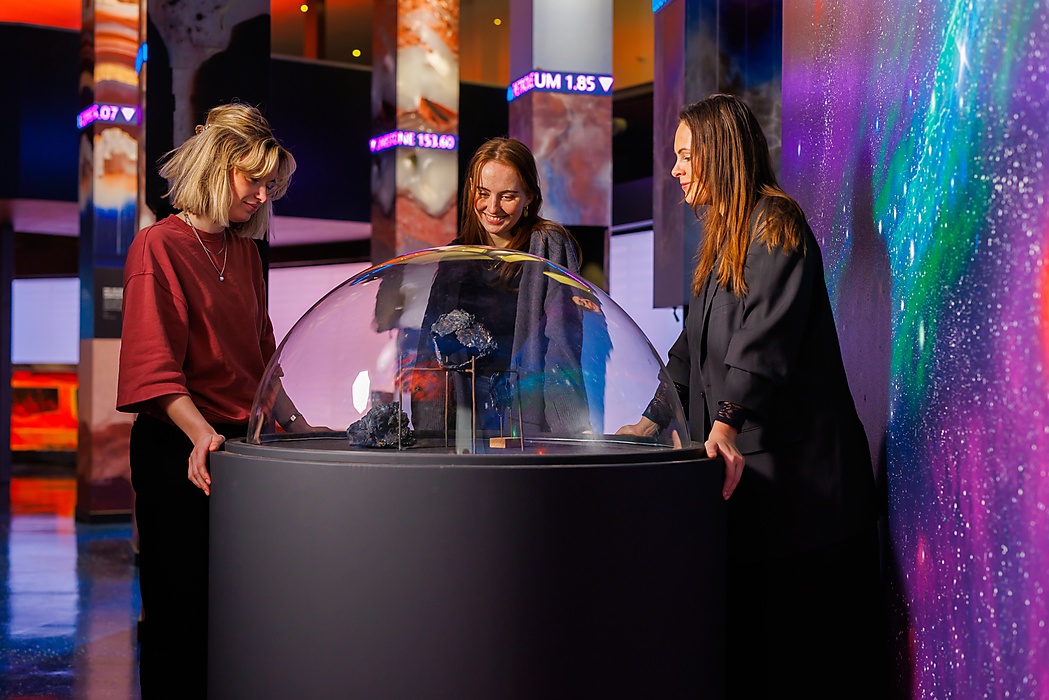
The new Next Nature exhibition Once Upon a Time… The Earth is now open at the Next Nature Museum/Evoluon in Eindhoven. Students receive a discount when they show their student ID.
Prof. dr. ir. Inge Loes ten Kate is a professor in Planetary Science and Astrobiology, chair of the Origins Center and the scientific director of the PRELIFE consortium. She works at Utrecht University and the University of Amsterdam. She has been fascinated by space her entire life, studied Aerospace Engineering to learn how to get there, and received her PhD in Astronomy studying Mars.
Andres Delhaas is a futurist and transhumanist who explores ideas at the intersection of nature, technology, and the future of humanity. They work as a storyteller and educator for the Next Nature Network. With a background in biology and a passion for technology, they explore questions such as Where did we come from? and Where are we going?, challenging us to reimagine what it means to be human.
Ticket reservation recommended
To be assured of a seat, we recommend reserving a ticket (black "order" button).
SG & USE/ITEC registration
Please register for SG & USE/ITEC by scanning your student ID at the venue prior to the start of the program.
More information about SG & USE/ITEC can be found here.